Web cookies (also called HTTP cookies, browser cookies, or simply cookies) are small pieces of data that websites store on your device (computer, phone, etc.) through your web browser. They are used to remember information about you and your interactions with the site.
Purpose of Cookies:
Session Management:
Keeping you logged in
Remembering items in a shopping cart
Saving language or theme preferences
Personalization:
Tailoring content or ads based on your previous activity
Tracking & Analytics:
Monitoring browsing behavior for analytics or marketing purposes
Types of Cookies:
Session Cookies:
Temporary; deleted when you close your browser
Used for things like keeping you logged in during a single session
Persistent Cookies:
Stored on your device until they expire or are manually deleted
Used for remembering login credentials, settings, etc.
First-Party Cookies:
Set by the website you're visiting directly
Third-Party Cookies:
Set by other domains (usually advertisers) embedded in the website
Commonly used for tracking across multiple sites
Authentication cookies are a special type of web cookie used to identify and verify a user after they log in to a website or web application.
What They Do:
Once you log in to a site, the server creates an authentication cookie and sends it to your browser. This cookie:
Proves to the website that you're logged in
Prevents you from having to log in again on every page you visit
Can persist across sessions if you select "Remember me"
What's Inside an Authentication Cookie?
Typically, it contains:
A unique session ID (not your actual password)
Optional metadata (e.g., expiration time, security flags)
Analytics cookies are cookies used to collect data about how visitors interact with a website. Their primary purpose is to help website owners understand and improve user experience by analyzing things like:
How users navigate the site
Which pages are most/least visited
How long users stay on each page
What device, browser, or location the user is from
What They Track:
Some examples of data analytics cookies may collect:
Page views and time spent on pages
Click paths (how users move from page to page)
Bounce rate (users who leave without interacting)
User demographics (location, language, device)
Referring websites (how users arrived at the site)
Here’s how you can disable cookies in common browsers:
1. Google Chrome
Open Chrome and click the three vertical dots in the top-right corner.
Go to Settings > Privacy and security > Cookies and other site data.
Choose your preferred option:
Block all cookies (not recommended, can break most websites).
Block third-party cookies (can block ads and tracking cookies).
2. Mozilla Firefox
Open Firefox and click the three horizontal lines in the top-right corner.
Go to Settings > Privacy & Security.
Under the Enhanced Tracking Protection section, choose Strict to block most cookies or Custom to manually choose which cookies to block.
3. Safari
Open Safari and click Safari in the top-left corner of the screen.
Go to Preferences > Privacy.
Check Block all cookies to stop all cookies, or select options to block third-party cookies.
4. Microsoft Edge
Open Edge and click the three horizontal dots in the top-right corner.
Go to Settings > Privacy, search, and services > Cookies and site permissions.
Select your cookie settings from there, including blocking all cookies or blocking third-party cookies.
5. On Mobile (iOS/Android)
For Safari on iOS: Go to Settings > Safari > Privacy & Security > Block All Cookies.
For Chrome on Android: Open the app, tap the three dots, go to Settings > Privacy and security > Cookies.
Be Aware:
Disabling cookies can make your online experience more difficult. Some websites may not load properly, or you may be logged out frequently. Also, certain features may not work as expected.
What advice would you give to new/incoming students?
I can remember being very intimidated as a Freshman. UConn is a big school so my advice would be to get involved early on! I met most of my close friends through organizations I joined as a Freshman.
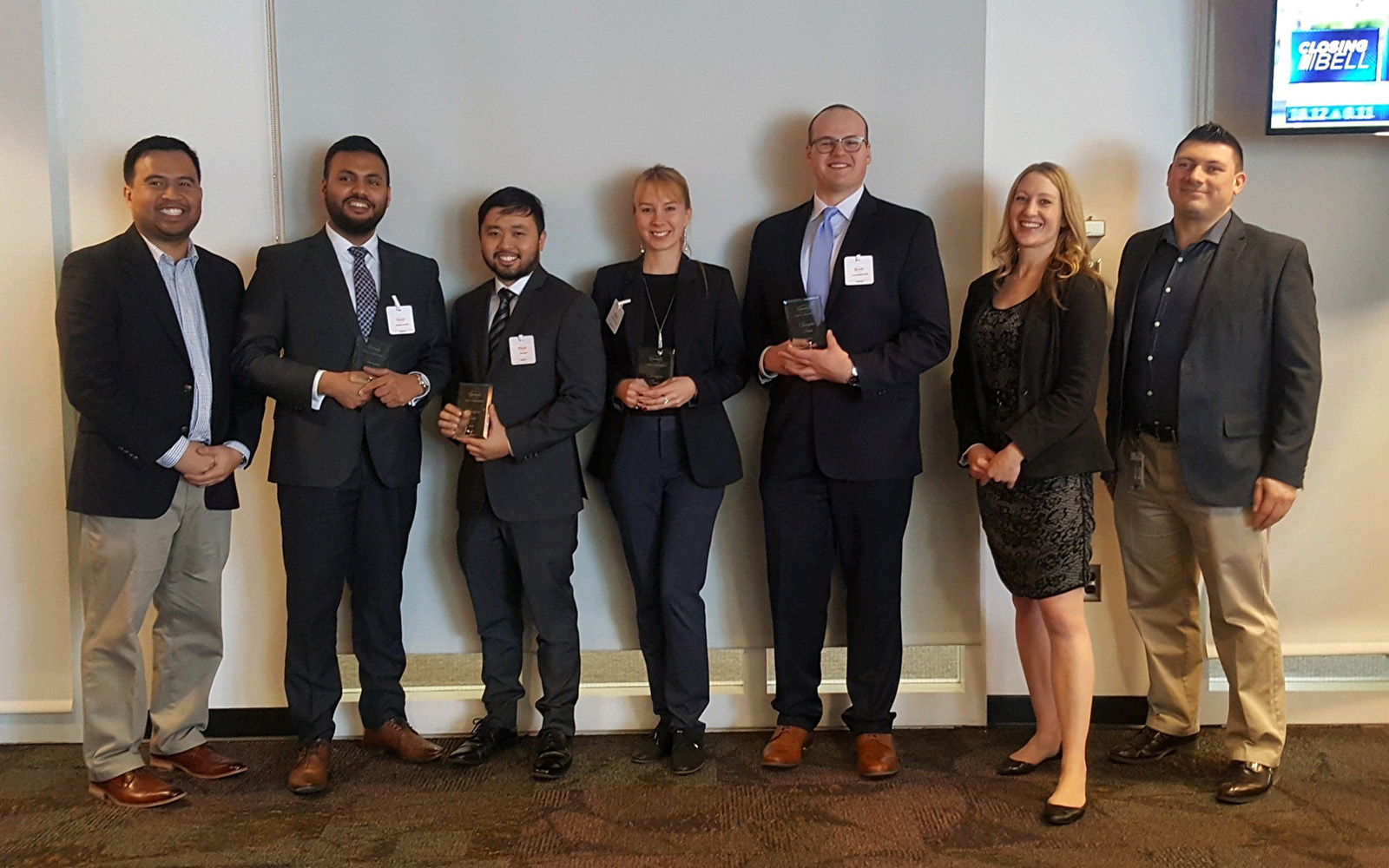
A group of UConn graduate students in financial risk management can now add the title of “international competition champions” to their resumes. Continue Reading
From left: Faculty award winners Xinxin Li, John Mathieu, Sulin Ba, Jan Stallaert, Nora Madjar, and David Papandria. (Nathan Oldham/UConn School of Business)
The School of Business recently honored some of its top faculty members for 2018, celebrating their achievements from the classroom to international research discoveries. Continue Reading
Shirley Tarabochia ’17 MBA, business owner John DePuma of DePuma Pasta, and Professor Wayne Bragg posed for a photo last year. Bragg was instrumental in introducing DePuma to Tarabochia, who helped streamline business practices at the growing pasta company. Bragg, who has been recognized as an outstanding professor seven times, will retire this summer. (Nathan Oldham/UConn School of Business)
Former Sikorsky Exec, EMBA Alumnus Said Grad Students Kept Him On Top of His Game
Wayne Bragg began his corporate career in the mail room at Pratt & Whitney, and retired as Operations Controller at Sikorsky Aircraft. It’s fair to say that during those 35 years, he became a keen observer of business from many different angles. Continue Reading
From left: Steven Lin, UConn law student, Christopher DiGiacomo ’18 MBA, and Brooke Tinnerello ’17, UConn law student. (Nora Madjar/UConn School of Business)
April was a busy month for negotiation at UConn. The Law School and the Business School cooperatively sent UConn teams to two international business law negotiation competitions. Continue Reading
School of Business Offers New 4+1 Bachelor/Master Degree Options in Financial Risk Management, Business Analytics
The School of Business will soon offer two accelerated programs that will allow students to earn both their undergraduate and graduate degrees in five years. Continue Reading
Agile feedback session in process (Guanwei Tao/UConn School of Business)
Agile is a magical stepping brick that brings lots of incredible job opportunities. The methodology is not only for the software development industry anymore, but also for projects with multiple decision makers. Continue Reading
Spring has arrived in Connecticut and, with it a renewed sense of excitement, growth and accomplishment both in our classrooms and through our research commitment. I would like to share with you some of our recent milestones.
Mark Shenkman ’65 (CLAS), ’07 H mentors financial risk management students and offers a strategy for success. (Arelys Martinez/Shenkman Capital)
More than a dozen graduate students in UConn’s Financial Risk Management program met with investment expert and alumnus Mark R. Shenkman on March 22, learning the secrets to capital management and asking him about everything from cryptocurrency to high-yield management. Continue Reading