Web cookies (also called HTTP cookies, browser cookies, or simply cookies) are small pieces of data that websites store on your device (computer, phone, etc.) through your web browser. They are used to remember information about you and your interactions with the site.
Purpose of Cookies:
Session Management:
Keeping you logged in
Remembering items in a shopping cart
Saving language or theme preferences
Personalization:
Tailoring content or ads based on your previous activity
Tracking & Analytics:
Monitoring browsing behavior for analytics or marketing purposes
Types of Cookies:
Session Cookies:
Temporary; deleted when you close your browser
Used for things like keeping you logged in during a single session
Persistent Cookies:
Stored on your device until they expire or are manually deleted
Used for remembering login credentials, settings, etc.
First-Party Cookies:
Set by the website you're visiting directly
Third-Party Cookies:
Set by other domains (usually advertisers) embedded in the website
Commonly used for tracking across multiple sites
Authentication cookies are a special type of web cookie used to identify and verify a user after they log in to a website or web application.
What They Do:
Once you log in to a site, the server creates an authentication cookie and sends it to your browser. This cookie:
Proves to the website that you're logged in
Prevents you from having to log in again on every page you visit
Can persist across sessions if you select "Remember me"
What's Inside an Authentication Cookie?
Typically, it contains:
A unique session ID (not your actual password)
Optional metadata (e.g., expiration time, security flags)
Analytics cookies are cookies used to collect data about how visitors interact with a website. Their primary purpose is to help website owners understand and improve user experience by analyzing things like:
How users navigate the site
Which pages are most/least visited
How long users stay on each page
What device, browser, or location the user is from
What They Track:
Some examples of data analytics cookies may collect:
Page views and time spent on pages
Click paths (how users move from page to page)
Bounce rate (users who leave without interacting)
User demographics (location, language, device)
Referring websites (how users arrived at the site)
Here’s how you can disable cookies in common browsers:
1. Google Chrome
Open Chrome and click the three vertical dots in the top-right corner.
Go to Settings > Privacy and security > Cookies and other site data.
Choose your preferred option:
Block all cookies (not recommended, can break most websites).
Block third-party cookies (can block ads and tracking cookies).
2. Mozilla Firefox
Open Firefox and click the three horizontal lines in the top-right corner.
Go to Settings > Privacy & Security.
Under the Enhanced Tracking Protection section, choose Strict to block most cookies or Custom to manually choose which cookies to block.
3. Safari
Open Safari and click Safari in the top-left corner of the screen.
Go to Preferences > Privacy.
Check Block all cookies to stop all cookies, or select options to block third-party cookies.
4. Microsoft Edge
Open Edge and click the three horizontal dots in the top-right corner.
Go to Settings > Privacy, search, and services > Cookies and site permissions.
Select your cookie settings from there, including blocking all cookies or blocking third-party cookies.
5. On Mobile (iOS/Android)
For Safari on iOS: Go to Settings > Safari > Privacy & Security > Block All Cookies.
For Chrome on Android: Open the app, tap the three dots, go to Settings > Privacy and security > Cookies.
Be Aware:
Disabling cookies can make your online experience more difficult. Some websites may not load properly, or you may be logged out frequently. Also, certain features may not work as expected.
When entrepreneur Peter J. Werth pledged more than $22 million to the University of Connecticut last winter, for the creation of the Werth Institute for Entrepreneurship & Innovation, a new chapter was written in UConn’s history.Continue Reading
Most of us are aware of the state-wide efforts underway to jumpstart the Connecticut economy by inspiring entrepreneurship. As we consider these efforts, it is worth contemplating how it is that the entrepreneur does what she does. Continue Reading
News Times– In the past three months, Point72 Asset Management has seen one executive sue the firm, and two of its highest-ranking officials leave the organization.
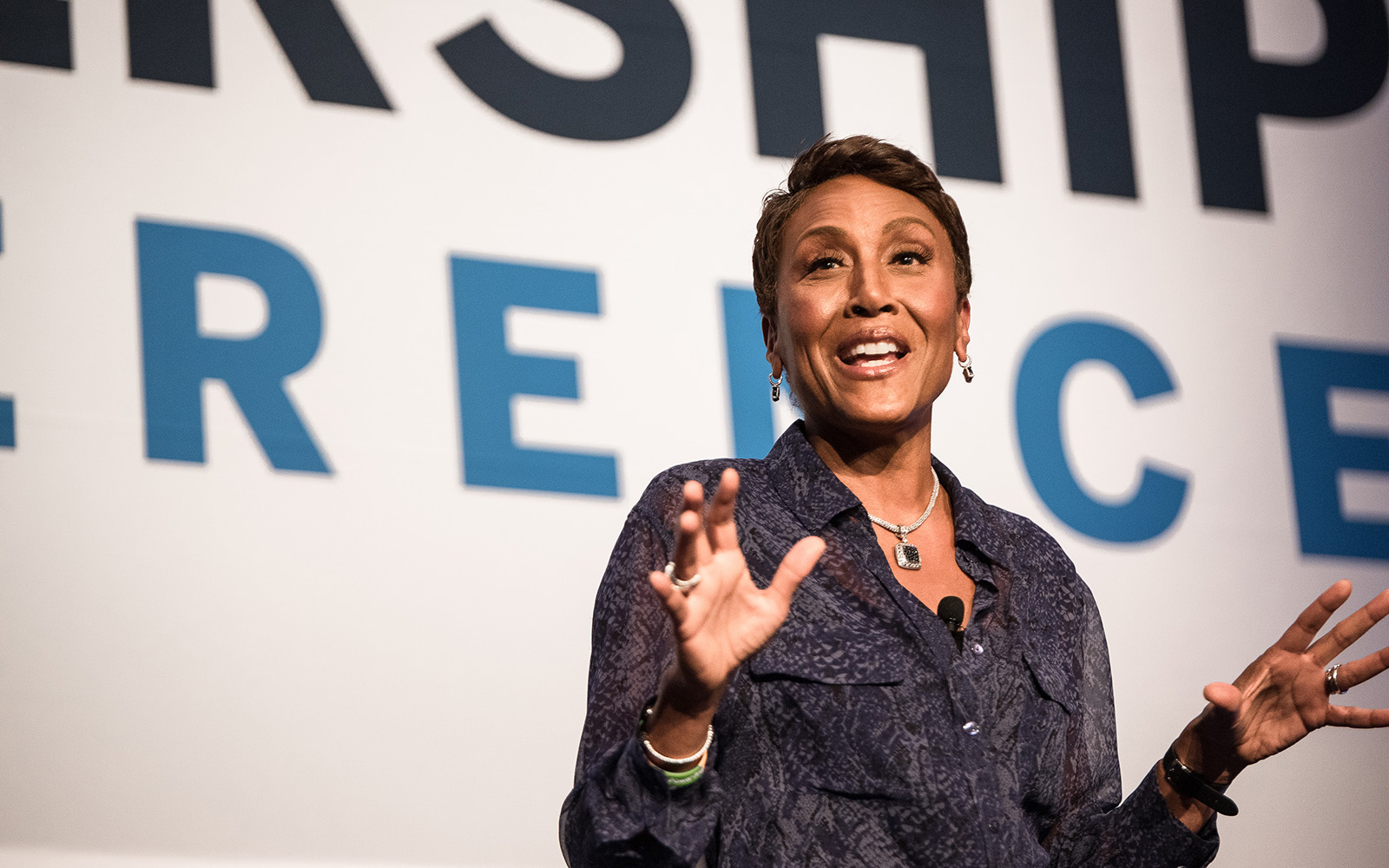
Robin Roberts, Co-Anchor, ABC “Good Morning America,” delivers the keynote presentation. (Nathan Oldham/UConn School of Business)
A tidal wave of change is bearing down on business, and many of the traditional leadership structures that have worked so well in the past are breaking down.
Yet after interviewing business icons, U.S. Presidents, the Pope, and many other powerful leaders, Alan Murray, the first speaker at the Geno Auriemma UConn Leadership Conference, offered some guidelines for surviving and thriving in this rapidly and profoundly changing business climate. Continue Reading
Managing Director and Head of Business Development at GLG Patrick Donegan chats with UConn School of Business Dean John Elliott (left) and others at “Leading in Turbulent Times.” The event was presented by GLG and UConn School of Business at GLG (Gerson Lehrman Group) on November 15, 2017 in New York City. (Photo by Andrew Toth/Getty Images for GLG)
Panelists: ‘Turbulent Times’ Provide Opportunities for Leaders to Emerge
Former U.S. Navy SEAL commander David Cooper knows a few things about leading in turbulent times.
Cooper served the elite unit for 25 years, ventured on dozens of dangerous deployments, and earned an array of medals, including one Silver Star and six Bronze Stars.
So when he talked about the U.S. Navy Seals’ 10-year manhunt for Osama bin Laden, and his killing in May 2011, the audience of UConn graduate business students, alumni and friends were engrossed. Continue Reading
As we approach the final weeks of 2017, the School of Business is growing, thriving and delivering its best to our students, wherever they may be.
Excitement has been at fever pitch in the last few months. We have celebrated phenomenal growth in our campuses, our programs and our student enrollment. Continue Reading
CIO panelists from Synchrony Financial, FactSet, and Stanley Black & Decker talk about Leading Digital Transformation (Katherine Ruiz/UConn School of Business)
Whether their business is customer service, manufacturing of tools, or software and analytics, corporate chief information officers are always focused on the next “best technology.”
That was the message from the UConn School of Business-sponsored program on Nov. 7 titled, “Leading Digital Transformation,” at the Stamford campus. Panelists included Carol Juel of Synchrony Financial, Cindy Finkelman of FactSet and Lori Groth of Stanley Black & Decker. The program was moderated by Sulin Ba, associate dean.
All three presenters talked about the rapid pace of business today and that their companies must quickly adapt to digital transformations ranging from cybersecurity to artificial intelligence to employee recruitment.
I attended the Professional Sales Leadership (PSL) Role Play Networking event with Mary Caravella’s Professional Selling course and Bill Ryan’s Sales Leadership course in late October. Employers, faculty, and students from both the Professional Selling and Sales Leadership courses attended this event in order to enhance students’ communication skills. Continue Reading
Air travel is no longer glamorous and sometimes, well, often, just annoying – too many people on oversold flights, crammed into tight spaces, and fighting over whether it is OK to put a seat back.
Add to this weather delays, mechanical problems, TSA screenings, and having to pay for every little extra, and it is not surprising that the flying passenger is no longer a happy, friendly person. Continue Reading