Web cookies (also called HTTP cookies, browser cookies, or simply cookies) are small pieces of data that websites store on your device (computer, phone, etc.) through your web browser. They are used to remember information about you and your interactions with the site.
Purpose of Cookies:
Session Management:
Keeping you logged in
Remembering items in a shopping cart
Saving language or theme preferences
Personalization:
Tailoring content or ads based on your previous activity
Tracking & Analytics:
Monitoring browsing behavior for analytics or marketing purposes
Types of Cookies:
Session Cookies:
Temporary; deleted when you close your browser
Used for things like keeping you logged in during a single session
Persistent Cookies:
Stored on your device until they expire or are manually deleted
Used for remembering login credentials, settings, etc.
First-Party Cookies:
Set by the website you're visiting directly
Third-Party Cookies:
Set by other domains (usually advertisers) embedded in the website
Commonly used for tracking across multiple sites
Authentication cookies are a special type of web cookie used to identify and verify a user after they log in to a website or web application.
What They Do:
Once you log in to a site, the server creates an authentication cookie and sends it to your browser. This cookie:
Proves to the website that you're logged in
Prevents you from having to log in again on every page you visit
Can persist across sessions if you select "Remember me"
What's Inside an Authentication Cookie?
Typically, it contains:
A unique session ID (not your actual password)
Optional metadata (e.g., expiration time, security flags)
Analytics cookies are cookies used to collect data about how visitors interact with a website. Their primary purpose is to help website owners understand and improve user experience by analyzing things like:
How users navigate the site
Which pages are most/least visited
How long users stay on each page
What device, browser, or location the user is from
What They Track:
Some examples of data analytics cookies may collect:
Page views and time spent on pages
Click paths (how users move from page to page)
Bounce rate (users who leave without interacting)
User demographics (location, language, device)
Referring websites (how users arrived at the site)
Here’s how you can disable cookies in common browsers:
1. Google Chrome
Open Chrome and click the three vertical dots in the top-right corner.
Go to Settings > Privacy and security > Cookies and other site data.
Choose your preferred option:
Block all cookies (not recommended, can break most websites).
Block third-party cookies (can block ads and tracking cookies).
2. Mozilla Firefox
Open Firefox and click the three horizontal lines in the top-right corner.
Go to Settings > Privacy & Security.
Under the Enhanced Tracking Protection section, choose Strict to block most cookies or Custom to manually choose which cookies to block.
3. Safari
Open Safari and click Safari in the top-left corner of the screen.
Go to Preferences > Privacy.
Check Block all cookies to stop all cookies, or select options to block third-party cookies.
4. Microsoft Edge
Open Edge and click the three horizontal dots in the top-right corner.
Go to Settings > Privacy, search, and services > Cookies and site permissions.
Select your cookie settings from there, including blocking all cookies or blocking third-party cookies.
5. On Mobile (iOS/Android)
For Safari on iOS: Go to Settings > Safari > Privacy & Security > Block All Cookies.
For Chrome on Android: Open the app, tap the three dots, go to Settings > Privacy and security > Cookies.
Be Aware:
Disabling cookies can make your online experience more difficult. Some websites may not load properly, or you may be logged out frequently. Also, certain features may not work as expected.
WNPR– As social creatures we know that isolation can be emotionally difficult, but research shows that it can be psychologically damaging as well. So why then, would anyone live this way by choice? This hour, we hear two such cases of isolated living.
The first involves six scientists who lived in a dome on a secluded island for a year to simulate conditions settlers may one day find on Mars.
Management professor John Mathieu was honored as a Board of Trustees Distinguished Professor, the highest honor that the University bestows on faculty who have demonstrated excellence in teaching, research and service. Pictured are management faculty members David Souder, Greg Reilly, John Mathieu, Gary Powell, Lucy Gilson, department head, and John Elliott, School of Business dean. (UConn School of Business)
Professor Mathieu Wins Two Lifetime Achievement Awards—In Two Months
Management Professor John Mathieu has received two lifetime achievement awards, in two months, recognizing his work in the field of leadership and organizational management. Continue Reading
UConn Magazine– Getting to the Red Planet is a lot more than just rocket science. Management Professor John Mathieu ’80 (CLAS) is working with NASA on the human mechanics.
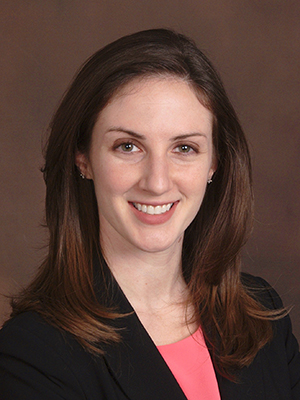
Margaret Luciano ’15 Ph.D. (Management), has added another honor to her long list of recognitions.
In September it was announced that her Ph.D. dissertation won the Society for Industrial and Organizational Psychology’s S. Rains Wallace Award, recognizing the best doctoral dissertation in the field of industrial and organizational psychology. Continue Reading
Alumna Margaret Luciano ’15 Ph.D. Continues to Win Recognition for Research
Margaret Luciano ’15 Ph.D. (management) was recently awarded the J. Richard Hackman Award for her Ph.D. dissertation. The award is given to a recent graduate whose work shows the greatest potential to advance the understanding of groups beyond one discipline.
Margaret Luciano ’15 Ph.D. (UConn School of Business)
Luciano’s dissertation, “Unpacking the Dynamics of Cross-Unit Coordination: A Multi-Level Quasi-Experimental Investigation,” studied 2,357 hospital-patient transfers between units over a 16-week period and investigated the implications for patient care.
She received the Hackman Award at the 2016 INGRoup conference in Helsinki, Finland in July. Her adviser, UConn Management Professor John Mathieu, was also in attendance.
At the award ceremony, Luciano’s dissertation was described as “theoretically sophisticated and interesting, methodologically rich and analytically eloquent.” Her research improved the work processes and quality of work life for hospital employees, improved patient quality of care and paid dividends to the hospital, the award committee concluded. “She not only advanced our science, but also our practice,” they said.
Luciano is now an assistant professor of management at Arizona State University.